
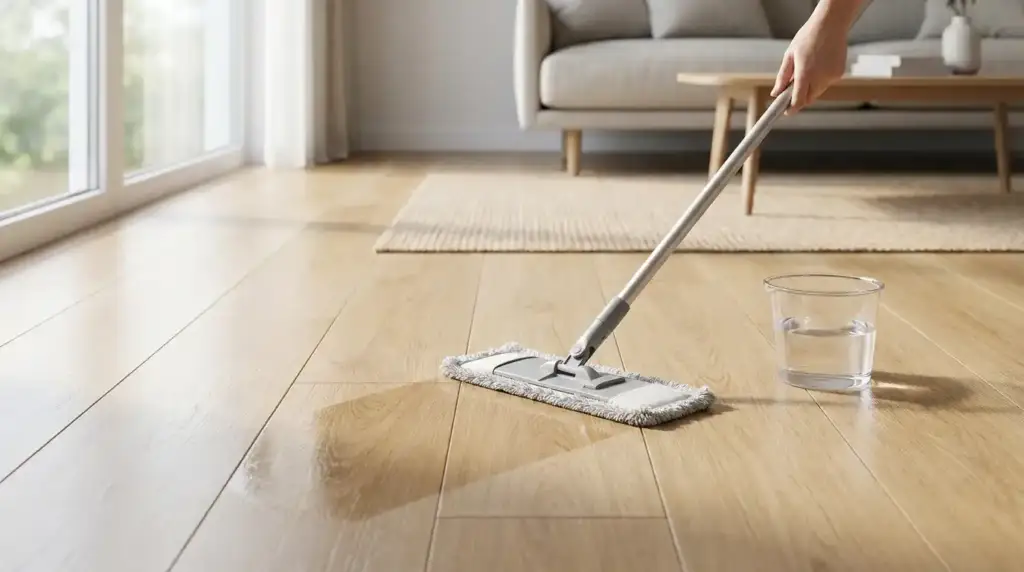
A well installed floor is only as good as the way it is maintained. Whether you choose teak, engineered wood, SPC, ResinCore or laminate, the care routine decides how long the floor keeps its color, gloss and structure. Each material reacts differently to foot traffic, spills, sand, pets and humidity.
This flooring maintenance guide gives simple care routines for homes and commercial spaces. It covers daily, weekly and seasonal care, the right cleaners for each material, how to deal with spills and stains, how to prevent damage, and when to refinish or replace. Property managers and contractors can use the commercial maintenance plan near the end to brief cleaning staff.
Quick Care Checklist by Material
Wood is a natural material that moves with humidity. SPC and ResinCore are waterproof but still need the right cleaning habits to keep the wear layer looking good. The table summarizes the essentials.
| Material | Daily Cleaning | Weekly Care | Avoid |
|---|---|---|---|
| Teak and engineered wood | Dry mop or vacuum on a hard-floor setting | Barely damp mop with a pH-neutral wood cleaner | Steam mops, soaking, harsh chemicals |
| SPC | Sweep or vacuum | Damp mop with a mild detergent | Abrasive pads, wax, solvent cleaners |
| Laminate and MoistureShield 1000 | Vacuum or microfiber mop | Spray-and-wipe laminate cleaner | Standing water, oil-based polish |
| ResinCore | Vacuum and wipe | pH-balanced cleaner | Strong acids or alkalis |
Pro tip: Always wring mops out well. Standing water is the enemy of joints and edges, even on waterproof floors. Our waterproof flooring guide explains where the limits are. Use soft-bristle vacuum heads and put felt pads under furniture legs.
Daily, Weekly and Seasonal Routines
Daily
- Remove grit with a dry microfiber mop or vacuum. Sand acts like sandpaper on any finish.
- Wipe spills as soon as they happen.
- Shake out entrance mats.
Weekly
- Damp mop with the cleaner suited to the material.
- Check high-traffic paths and entries for scratches.
- Clean under furniture and around edges where dust collects.
Seasonal
- Check indoor humidity and adjust humidifiers or dehumidifiers.
- Replace worn felt pads and mats.
- Inspect transitions, expansion gaps and silicone at wet areas.
- For oiled wood floors, refresh the oil in high-traffic areas as the finish supplier recommends.
Tools and Cleaners to Use and Avoid
Use pH-neutral or manufacturer-approved cleaners. Many all-purpose sprays contain acids, ammonia or alcohol that can dull or strip protective coatings. Microfiber mops pick up fine dust better than cotton and leave fewer streaks.
| Cleaner | Wood | SPC | Laminate | ResinCore |
|---|---|---|---|---|
| pH-neutral floor cleaner | Yes | Yes | Yes | Yes |
| Mild dish soap in warm water | Sparingly | Yes | Sparingly | Yes |
| Vinegar | No | Diluted, occasionally | No | No |
| Ammonia or bleach | No | No | No | No |
| Wax or polish | Only if the finish requires it | No | No | No |
| Steam mop | No | No | No | No |
Modern UV-cured finishes already have the sheen they need, so waxes are rarely necessary and can make floors slippery.
Caring for Teak and Oiled Wood Floors
Teak flooring has natural oils that help it resist moisture, but its surface finish still needs care. Lacquered teak is cleaned like any lacquered wood floor. Oiled teak needs occasional maintenance oil in walkways to keep its sheen and protection. Teak also deepens in color with light over the first months, so move rugs and furniture now and then to avoid shadow marks. Read our teak flooring guide for more on the species.
Spill and Stain Protocols
- Act fast. Blot spills with dry paper towels instead of rubbing.
- Rinse gently. For sticky residues, use a damp cloth with mild detergent, then dry the area.
- Spot treat. For stubborn stains such as wine or ink, use a stain remover approved for the floor type. Never use bleach.
- Check the joints. If liquid reached the seams, dry them and watch for swelling on wood-based products.
Damage Prevention
Furniture pads, mats and humidity control
Use felt pads under chairs and tables, mats at every entrance, and never drag heavy items. Door mats trap the sand and grit that abrade finishes. The Resilient Floor Covering Institute’s commercial maintenance guide, for example, advises walk-off mats at building entrances.
For wood and engineered wood floors, keep indoor humidity within the range the manufacturer recommends. The National Wood Flooring Association suggests 30 to 50 percent for wood floors. Use a humidifier in dry winters and a dehumidifier in humid summers to limit movement and gaps. Our humid climate flooring guide and Florida and Hawaii flooring guide explain why this matters in warm regions.
Pets, kids and high traffic
Trim pets’ nails and use rugs in play areas. In offices or shops, use chair mats and runners in busy corridors. See our pet friendly flooring guide and wear-resistant flooring guide.
| Preventive item | Benefit | Recommended for |
|---|---|---|
| Felt pads | Prevent dents and scratches | All materials |
| Entry mats | Trap sand and grit | All materials |
| Chair mats | Stop caster wear | Offices and home offices |
| Area rugs | Reduce wear in living areas | Wood and laminate |
| Humidifier or dehumidifier | Limit movement and gaps | Wood floors |
| UV film or blinds | Reduce fading | Sunny rooms |
Cleaning Schedule by Material
| Frequency | SPC | Laminate | Engineered wood and teak | ResinCore |
|---|---|---|---|---|
| Daily | Sweep and wipe | Vacuum | Dust mop | Vacuum |
| Weekly | Mild detergent | Laminate cleaner | Barely damp mop | pH-neutral cleaner |
| Quarterly | Inspect joints and edges | Inspect edges, trims and expansion gaps | Check the finish for wear, refresh oil if oiled | Check expansion gaps |
| Annually | Deep clean | Check underlay and expansion gaps at the walls | Recoat only when the finish is worn | Deep clean |
For expected service life by material, see our flooring lifespan comparison.
Commercial Maintenance Plan
Hotels, offices, shops and rental properties need a written plan so different cleaning staff do the same thing. A simple plan includes:
- Approved cleaners listed by product name and dilution.
- Equipment rules, for example no steam mops and no stiff brushes.
- Daily dust removal and weekly damp mopping for each zone.
- Monthly inspection of entries, corridors and wet areas.
- A small stock of spare planks from the original order for repairs.
- A record of the product series and production lot for reorders.
Click floors such as SPC, ResinCore and laminate let maintenance teams replace single damaged planks without redoing the room. Our commercial flooring guide for contractors covers attic stock and specification.
When to Refinish or Replace
| Floor | Signs of wear | What to do |
|---|---|---|
| Lacquered wood | Dull paths, fine scratches | Screen and recoat before the wood is exposed |
| Oiled wood | Dry, pale walkways | Apply maintenance oil |
| Engineered wood | Deep scratches | Sand and refinish if the wear layer allows |
| SPC, ResinCore, laminate | Worn-through pattern or chipped edge | Replace individual planks |
FAQs
Can I steam clean SPC or laminate floors?
No. Heat and moisture can damage joints and coatings. Use a damp mop only.
How often should I deep clean my floors?
It depends on traffic and the manufacturer’s instructions. Busy commercial spaces need it more often than homes.
What is the best cleaner for engineered wood?
A pH-neutral wood floor cleaner without alcohol or ammonia, or the cleaner recommended by the finish supplier. Avoid generic all-purpose sprays.
Can I use vinegar or baking soda on floors?
Avoid vinegar on wood, laminate and ResinCore because it is acidic and can damage finishes. Baking soda is safe only for small spot cleaning.
How do I restore a dull floor?
Check whether the surface finish is worn. Wood floors can be recoated with a recoat system or by a professional installer. SPC, laminate and ResinCore planks with a worn-through surface are replaced individually.
Do teak floors need special care?
Lacquered teak is cleaned like other lacquered wood. Oiled teak needs maintenance oil from time to time.
Get Care Guidance for Your Floors
Karlyn Floors provides care and maintenance guidance and after-sales support for every series we supply, including teak, engineered wood, ResinCore, laminate and SPC. Contact our team to request care instructions for a specific product.