
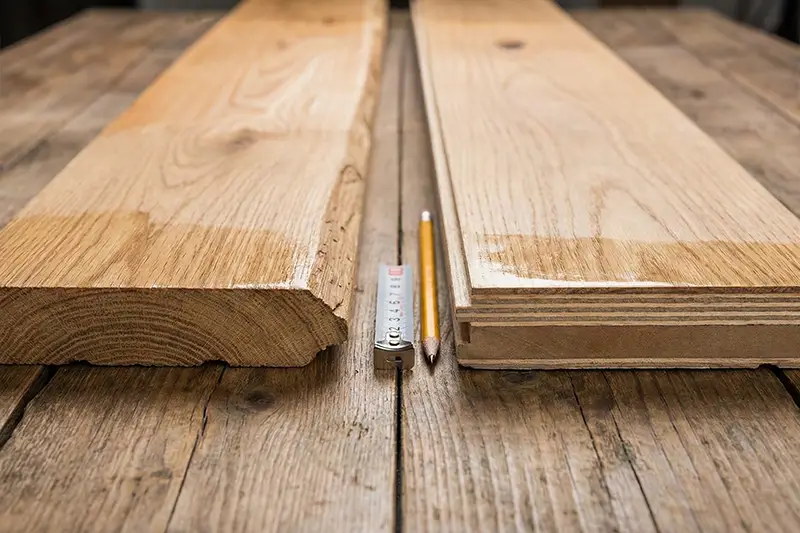
The solid wood vs engineered wood flooring decision comes down to more than aesthetics — it’s about durability, climate suitability, and long-term value.
Solid wood floors, made from single timber planks, deliver classic elegance and lasting natural warmth. Engineered wood floors, on the other hand, combine a real wood veneer over stable plywood or HDF cores, offering superior resistance to humidity and temperature changes. In this guide, we’ll break down every major difference — from construction and performance to sustainability and pricing — to help you make an informed, future-proof decision.
Quick Verdict & Who Each Option Fits
Summary
If you’re short on time, here’s the quick breakdown: solid wood flooring is ideal for timeless luxury spaces where sanding and refinishing are expected, while engineered wood suits modern living areas, humid climates, and underfloor heating installations. Solid wood can last over 50 years with proper care, but engineered wood often provides better value and stability for fast-paced lifestyles.
| Category | Solid Wood | Engineered Wood |
|---|---|---|
| Construction | Single timber plank | Multi-layer plywood + veneer |
| Moisture Resistance | Low | High |
| Lifespan | 40–70 years | 25–40 years |
| Refinishing | Multiple times | 1–3 times (depending on veneer) |
| Price | Higher | More cost-effective |
| Ideal Use | Luxury homes, heritage spaces | Apartments, humid zones, offices |
Best For: Homes, Offices, Humid Climates
Solid wood thrives in climate-controlled environments like upscale villas or hotels. Engineered wood, thanks to its layered structure, is preferred for basements, coastal properties, or areas where temperature fluctuates — providing a wood feel without warping or cupping.
How They’re Built: Solid Wood vs Engineered Wood
Construction & Materials
Solid wood flooring is milled from a single log, typically 18–22mm thick, with natural grains and tonal variation that add character over time. It expands and contracts naturally with changes in humidity, which can require seasonal maintenance. Our teak flooring is a premium example of what solid wood can deliver in terms of natural oil content and pest resistance.
Engineered wood consists of multiple cross-laminated layers — usually birch or eucalyptus plywood — topped with a 2–6mm real hardwood veneer. This cross-grain structure provides dimensional stability, reducing the risk of expansion and contraction while preserving the look of genuine wood. The result is a floor that maintains warmth and authenticity but is less vulnerable to moisture. Explore our engineered wood flooring range for available species, dimensions, and veneer options.
Dimensional Stability & Moisture Response
Solid wood expands when humidity rises and contracts when it drops. In humid climates or coastal regions, gaps or cupping may appear. Engineered wood’s multi-layer core prevents this by distributing stress across layers. The plywood backing and UV-cured finishes make it resistant to everyday moisture, ideal for kitchens, living rooms, or offices with AC systems. For a more detailed breakdown of moisture performance across all flooring types, see our waterproof flooring guide and our humid climate flooring guide.
Performance & Longevity
Durability & Scratch Resistance
Both options perform well, but durability depends on wood species and finish type. Solid oak or maple is exceptionally strong, while engineered floors with UV-cured aluminum oxide finishes resist scratches and fading better. Engineered surfaces often integrate nano-coating technologies, providing an extra layer of protection against wear and staining.
Refinishing Potential & Lifespan
Solid wood can be sanded and refinished multiple times — often 4 to 7 cycles over its life. Engineered wood can be refinished fewer times (1–3), depending on veneer thickness. However, modern veneers and finishes can last 25–40 years without refinishing. This makes engineered wood more practical for commercial or leased properties where maintenance budgets are fixed. See our flooring lifespan comparison for how these figures stack up against SPC and laminate.
Cost, Installation & Maintenance
When comparing solid wood vs engineered wood on total cost of ownership, the upfront price only tells part of the story.
Price Ranges & TCO (Total Cost of Ownership)
Solid wood prices range between USD $80–$150 per m², while engineered options range between $50–$100 per m². The initial installation cost of solid wood is higher due to nailing and subfloor prep, but both types have similar long-term maintenance if humidity is managed. When considering total cost of ownership, engineered wood wins in humid climates where repairs and dehumidification costs for solid planks can add up.
| Cost Factor | Solid Wood | Engineered Wood |
|---|---|---|
| Material Price | $$$ | $$ |
| Installation | Nail-down / Glue-down | Floating / Nail-down / Glue-down |
| Maintenance | Regular waxing | Occasional cleaning |
| Lifespan ROI | 40–70 years | 25–40 years |
Installation Methods & Subfloor Conditions
Solid planks require nailing or gluing over plywood subfloors, which makes them unsuitable for concrete. Engineered wood can be installed over concrete, radiant heating, or existing floors using nail-down or glue-down systems. The lighter, faster installation reduces downtime in commercial settings.
Maintenance Routines
Solid wood floors benefit from waxing and humidity control. Engineered floors need only regular sweeping and mild cleaning. Using a humidifier or dehumidifier during seasonal changes can preserve both. Our flooring maintenance guide covers routines for each floor type.
Design & Sustainability
Aesthetics & Species Options
Both flooring types come in popular species such as oak, walnut, teak, and maple. Solid wood tends to have deeper grain patterns and patina, while engineered wood can mimic exotic looks through top-layer veneers and finishes like brushed, smoked, or matte lacquer. Furthermore, both engineered and solid wood flooring can be made with wider planks and can be laid in creative patterns such as herringbone or V-shapes.
Certifications & Environmental Impact
Solid wood requires more raw timber, impacting sustainability unless sourced responsibly through programs like the Forest Stewardship Council (FSC). Engineered wood uses less hardwood per square meter, reducing deforestation impact. Many products comply with CARB Phase II emission standards or E0 certification for low formaldehyde emissions — key for achieving green building certifications such as LEED or WELL.
Comparison Table Summary
| Feature | Solid Wood | Engineered Wood |
|---|---|---|
| Construction | Single plank | Multi-layer (plywood + veneer) |
| Refinishing | Multiple | 1–3 times |
| Water Resistance | Poor | Excellent |
| Cost | High | Moderate |
| Environmental Impact | High (requires more wood) | Low (eco-friendly core) |
| Installation | Nail / glue | Floating / Nail / glue |
| Ideal For | Dry climates, luxury interiors | Humid climates, modern homes |
Case Study: Coastal Apartment vs Mountain Cabin
Scenario 1 – Coastal Apartment (Humidity 80%): A luxury apartment in Taipei used engineered oak flooring from Karlyn Floors. It resisted warping despite high humidity and minimal air conditioning. After three years, the boards retained 98% dimensional integrity.
Scenario 2 – Mountain Cabin (Dry 40%): A heritage-style cabin in Taichung used solid teak planks. Seasonal humidity swings required minor re-sanding but rewarded the owner with rich patina and warmth. After seven years, it remains the centerpiece of the interior.
FAQs
Which flooring lasts longer?
Solid wood can last over 50 years, engineered wood typically lasts 25–40 years with proper care.
Can engineered wood be refinished?
Yes, up to three times depending on veneer thickness.
Which is better for humid areas?
Engineered wood — it resists warping and is more dimensionally stable.
Are both eco-friendly?
Engineered wood uses less hardwood, often making it a greener option when FSC-certified.
Which adds more property value?
Both add value, but solid wood remains a hallmark of luxury, especially in high-end real estate.
Find Your Perfect Match with Karlyn Floors
Whether you’re creating a classic living space or a modern commercial environment, Karlyn Floors offers both premium solid and engineered wood flooring solutions designed for sustainability, beauty, and long-term performance. Explore our collections or request free samples today — let’s build a space that lasts beautifully for decades.